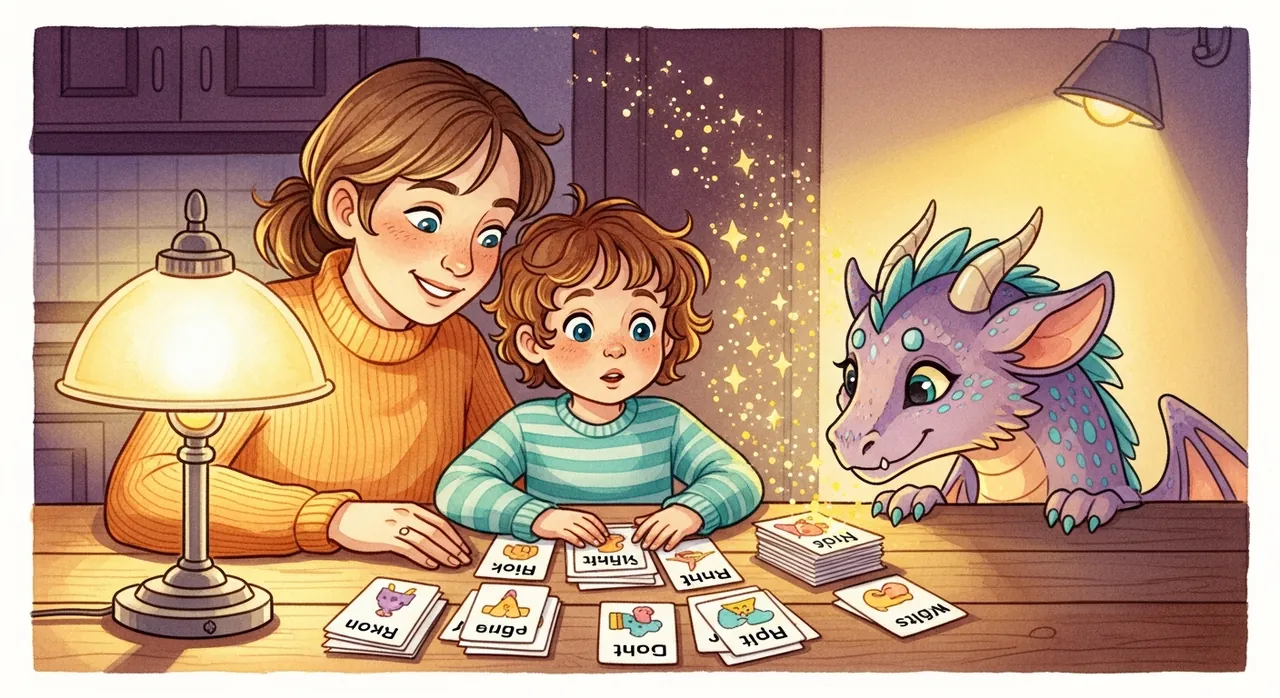
It's 6:45 on a Tuesday night. You've got twenty sight word flashcards spread across the kitchen table, your kindergartner is somewhere between bored and quietly hostile, and "the" has been stared at for what feels like the third week in a row. You're not doing anything wrong. Flashcards are just not a game. And five-year-olds are not great at pretending otherwise.
The good news is that sight words — those high-frequency words like "the," "and," "was," and "said" that make up roughly 75% of everything kids encounter in early reading — don't have to be a grind. The right games make them genuinely fun, and they build fluency faster than drilling ever will. Here's what actually works, and why.
Why Sight Word Games for Kindergarten Work Better Than You'd Expect
Sight words are tricky to teach because many of them can't be sounded out. Words like "said," "was," "come," and "of" don't follow the phonics rules kids are learning at the same time. They have to be recognized on sight, by feel — which means repetition is unavoidable, but how you create that repetition matters enormously.
Research in early literacy has found that children need anywhere from 7 to 50 encounters with a new word before it truly sticks. That number varies by child, by word, and by the day. Games create those encounters naturally, without a child ever feeling like they're working. When a five-year-old is genuinely invested in playing, they'll see the word "the" twenty times in a single session without complaint. Try achieving that with a stack of flashcards.
There's something else games do that drills simply can't: they create emotional associations with words. When a child successfully reads "jump" and something exciting happens as a result — they win a round, their character moves forward, a creature evolves — the brain tags that word with a small burst of positive feeling. That isn't just motivation. That's memory. Words learned in context, attached to experiences, are significantly more durable than words learned in isolation.
What Separates Effective Sight Word Games for Kindergarten from the Rest
Not every activity labeled a "game" actually works like one. Some are worksheets wearing a costume, and kids know the difference immediately. Here's what genuinely effective sight word games for kindergarten have in common.
Immediate feedback is non-negotiable at this age. A kindergartner who answers incorrectly and has to wait to find out needs a patience reserve they simply don't have yet. The best games respond instantly — ideally with something visually satisfying, like a sound, an animation, or a clear signal of success. That tight loop between action and response is what keeps young learners engaged and helps correction actually land.
Short sessions consistently beat long ones. A five-year-old's focused attention is a precious and finite thing. Games designed in two-to-five minute bursts, with natural stopping points that feel like wins, produce better retention than any twenty-minute marathon session. Ending while your child still wants to play more is not quitting early — it's smart design. You want them asking to come back tomorrow.
Visible progress keeps kids coming back. Abstract knowledge is a hard thing to feel. But a streak counter, a creature that grows, a collection that expands, a progress bar that fills — these give children something tangible to pursue. When they can see that something is building, they have a reason to keep going beyond just doing what a parent asks.
Sight Word Games for Kindergarten: From the Kitchen Table to the Screen
For a no-prep, no-cost option, a simple matching game is hard to beat. Write ten sight words on index cards, make two copies, shuffle them, and spread them face-down on the floor. Players flip two cards at a time looking for pairs. The game is familiar enough to start without explanation, and every flip requires reading a word, so the repetitions stack up quietly while kids are focused on winning.
Sight word hopscotch is another strong option, particularly for kids who need to move. Draw a hopscotch grid outside with chalk and write a different sight word in each square. Call out a word and have your child hop to it. Add the rule that they have to read the word aloud when they land, and you've built repetition into something that feels like pure play.
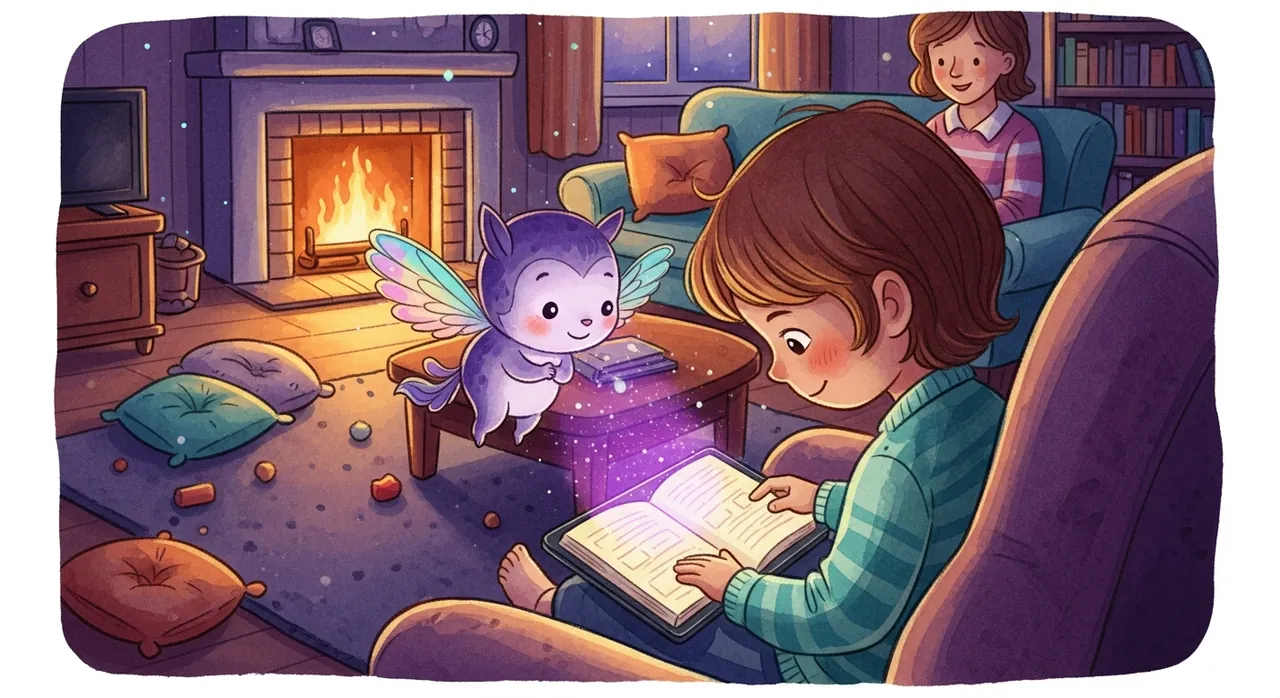
For screen time that actually earns its place in a child's day, Word Beasts takes a genuinely different approach. Kids raise magical creature companions by reading sight words correctly — the better they do, the more their beast grows and evolves. The AI-generated creature artwork is beautiful in a way that feels special, not generic, and children form real attachments to their beasts. They want to take care of them, which means they want to read.
Behind the scenes, a parent dashboard shows you exactly what's happening: accuracy by word, current streaks, and which words have reached true mastery. You can see at a glance whether "because" is sticking or still needs work, without having to quiz your child yourself. Word Beasts is designed for ages 4 through 8, so it grows with a child's reading level rather than becoming something they age out of quickly.
How to Know the Practice Is Actually Working
The clearest sign of real progress is transfer — when your child starts recognizing sight words out in the world, not just during practice. On a street sign. On the back of a cereal box. In a book they're reading for the first time. Drill-based learning tends to stay locked in the drill context. Game-based learning, because it's attached to experiences and emotion, travels.
Watch for speed as well as accuracy. In the early weeks, a child might correctly identify a word but slowly, with visible effort. After enough game-based repetitions, recognition becomes immediate. That moment when "said" stops being something to figure out and simply becomes something your child knows — that's the shift you're looking for.
Vary the games every few days when you can. Kids who lose enthusiasm for one format will often reset completely when the same words show up in a new context. Novelty reactivates attention, and attention is what makes learning stick.
Start Tonight
If the flashcard session already feels like a standoff before it starts, try one of these instead. A quick game of matching cards takes ten minutes and whatever you have on hand. Or open Word Beasts and let your child choose their first beast. The words take care of themselves from there.
Your kindergartner doesn't need to study. They need to play — with purpose. The right games make those two things look exactly the same.
Start playing at Word Beasts — the magical reading adventure for ages 4 to 8.