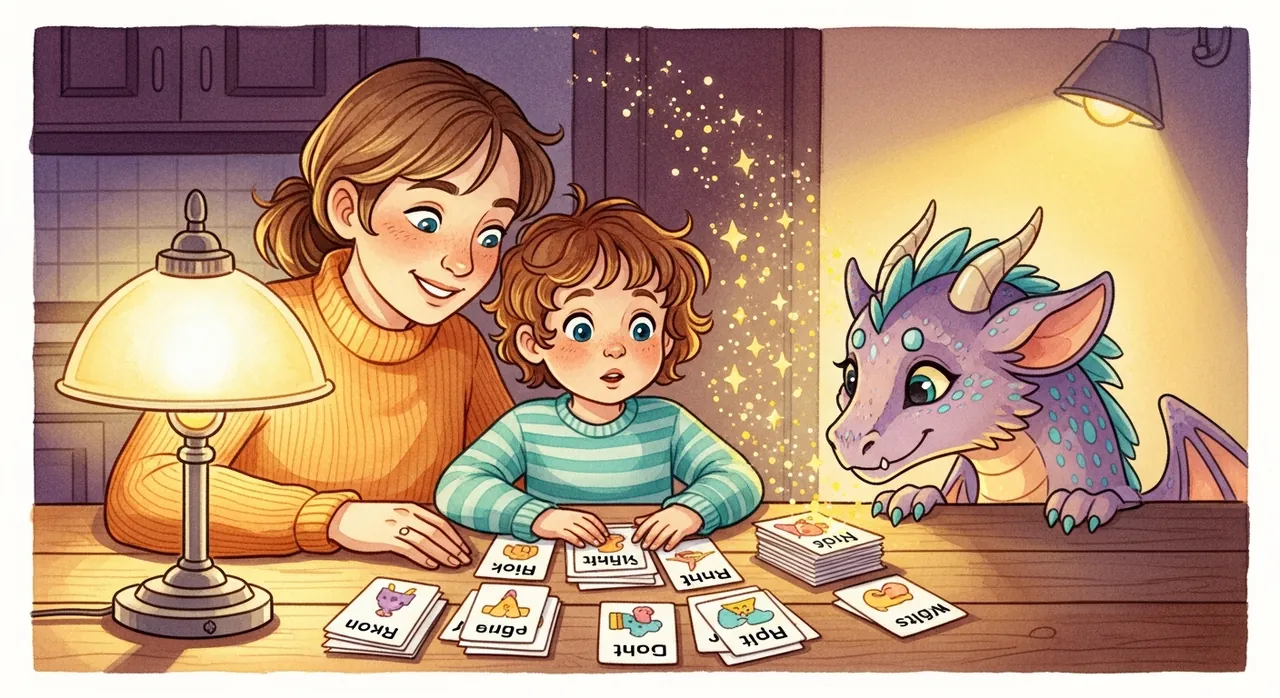
Every night it was the same scene at the kitchen table. Flash cards out, lamp on, hopeful face. And by the fourth word, my daughter was swinging her legs, eyes on the ceiling, somewhere else entirely. "This is boring." She said it like a fact, not a complaint. And honestly? She wasn't wrong.
If that sounds familiar, you're in the right place. Sight word practice at home is one of those tasks that sounds manageable in theory — just drill the words until they stick, right? — but in practice it fights against everything about how young kids actually learn. Here's what the research says actually works, and how to build a home routine that doesn't feel like a battle.
Why Sight Word Practice at Home Is Harder Than It Looks
Sight words — the ones kids are supposed to recognize instantly without sounding out, words like "the," "said," "was," "because," "they" — make up somewhere between 50 and 75 percent of all words in early readers. Getting them solid is genuinely important. The problem is that the classic approach, sit still and stare at cards until they stick, runs directly into how young brains are actually wired.
Research on early literacy is pretty consistent on this. Repetition matters, but repetition buried inside something meaningful — a game, a challenge, a character a child cares about — encodes differently than rote drilling. When a word appears in a context that carries some kind of stakes, the brain connects it to something. That connection is what makes it retrievable later, in a real book, under real conditions.
The other hidden problem with flashcard-style sight word practice at home is that you can't tell what's actually being retained. A child can echo back the correct word in the moment and have no memory of it twenty minutes later. You think you've made progress. You haven't. What you want is a way to track genuine mastery over time, not just in-the-moment recall.
What Effective Sight Word Practice at Home Actually Looks Like
The fundamentals are straightforward: kids need to encounter words many times, in varied contexts, over many days. How you create that repetition is where most home practice either works or falls apart.
Movement matters more than most parents expect. Writing a sight word in a tray of sand, stomping on it when it appears on the floor, tracing it in the air — these look like play but they're engaging different parts of the brain than passive looking. For kids between four and eight especially, physical engagement isn't a distraction from learning. It is the learning.
Games with a real win condition work better than open-ended activities. When a child has something genuine at stake — a timer to beat, a level to unlock, a creature to feed — their attention sharpens. The key is that the game mechanic has to actually require the child to read the word, not just look in its general direction.
Progress that kids can see motivates them in a way that praise alone doesn't. When your child can watch a word move from "learning" to "mastered," or see that they've read "because" correctly twelve days running, something clicks. They feel competent. That feeling is what makes them come back the next day without being asked.
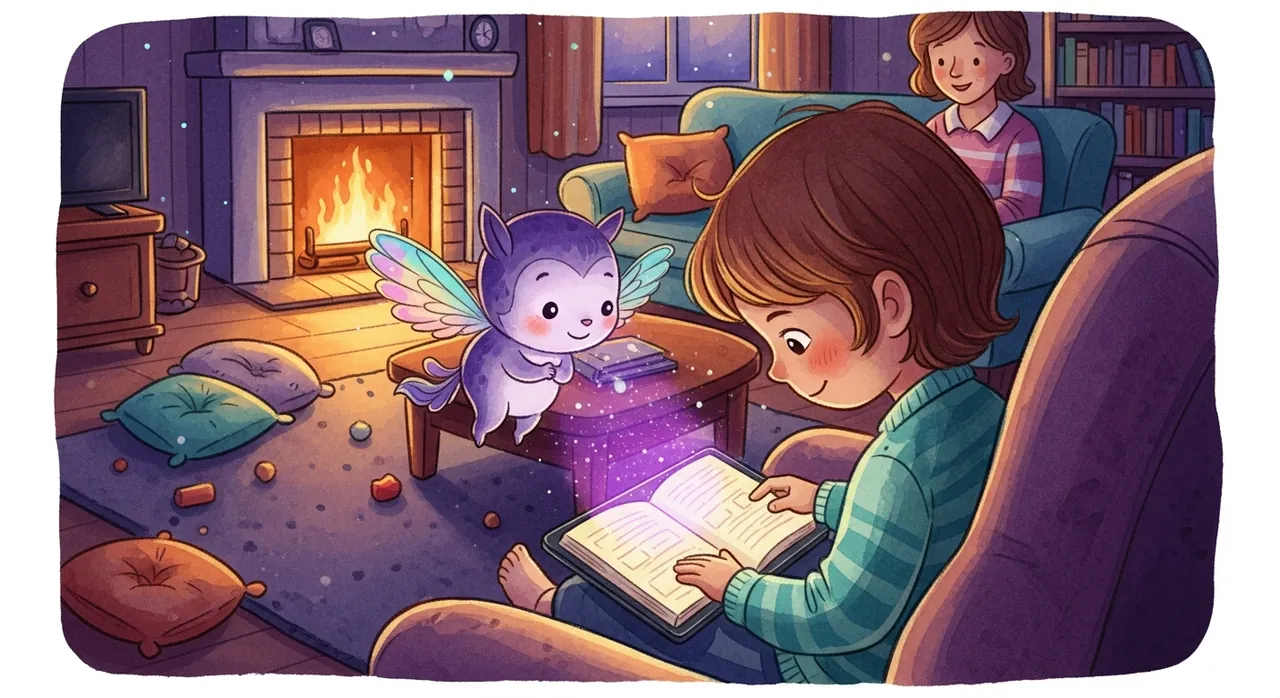
One tool that pulls this all together better than anything else I've found is Word Beasts. The premise is that your child raises magical creature companions that grow and evolve as they master sight words — beautiful AI-generated artwork, real personalities, creatures that visibly change the more your child practices. My daughter didn't experience it as homework at all. She thought of it as taking care of her beast. But she was drilling Dolch sight words in every single session.
What made the difference for me as a parent was the dashboard. It shows exactly which words each child has mastered, where accuracy is dipping, and how their streaks are tracking across days and weeks. I could see at a glance that "their" kept getting missed while "because" was solid. That kind of visibility lets you actually respond to what's happening rather than guessing.
Building a Sight Word Practice at Home Habit That Lasts
Consistency beats intensity. Twenty minutes of daily practice does more for retention than two hours on a Saturday. The easiest way to make it stick is to attach it to something already in your routine — right after dinner, right before bath, same chair, same time. Remove the decision-making and it becomes automatic.
Keep sessions short enough that your child finishes wanting a little more rather than relieved it's over. For most kids under seven, ten to fifteen focused minutes is plenty. For older kids in the four-to-ten range, twenty minutes is a reasonable ceiling. If your child is genuinely engaged and keeps going longer, that's great — but don't push past the point where it stops being fun. The moment it becomes a grind, you're working against the habit you're trying to build.
Give your child a way to see their own growth. Pull up the word list at the end of the week and let them read through words they couldn't read at the start. That visual proof of progress is one of the strongest motivators available at this age. Kids who see themselves getting better keep going. Kids who only hear that they're doing well eventually stop believing it.
When you're choosing tools for sight word practice at home, prioritize ones that surface data without making you chase it. You shouldn't have to quiz your child every evening to know where they stand. A good tool does that automatically and puts the information in front of you clearly.
The Bottom Line
You don't need a perfect curriculum or an expensive kit. You need consistency, context, and a way to keep it interesting long enough for real mastery to build. Most kids who struggle with sight words aren't struggling because they can't learn them. They're struggling because the method isn't holding their attention long enough for repetition to do its job.
Game-based practice, short daily sessions, visible progress — those three things will take you further than any amount of flashcards. Start where your child actually is, not where the grade-level chart says they should be, and build from there one word at a time.
If you want a place to start, try Word Beasts — built for exactly this moment, turning the repetition that sight word mastery requires into something kids genuinely ask for.